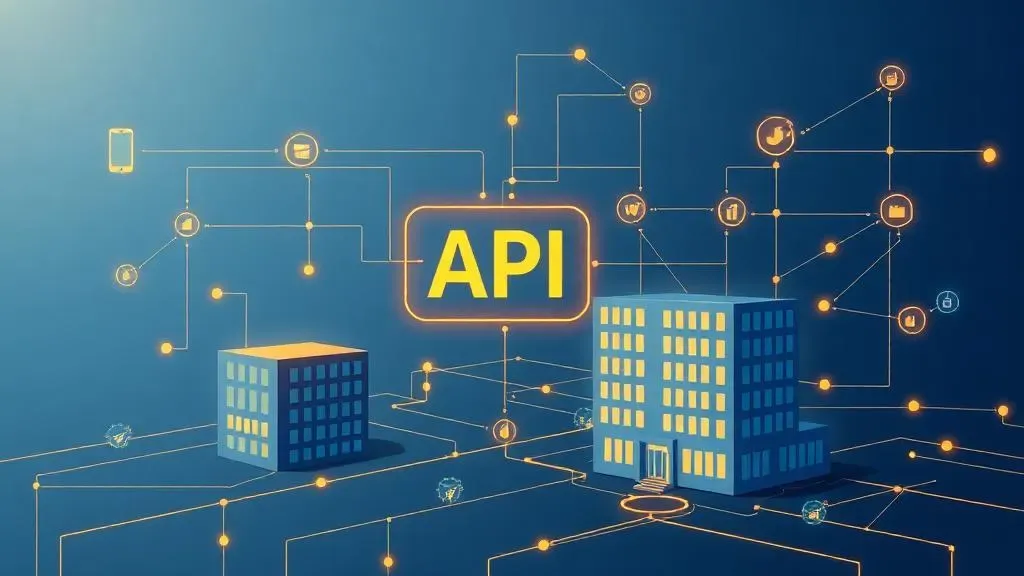
Property Management API
Modern property management no longer runs on a single system. Landlords, property managers, and real estate platforms use multiple tools for leasing, accounting, communication, maintenance, and reporting. When these systems operate independently, data becomes fragmented, workflows slow down, and operational visibility disappears. An API is what turns a stack of point tools into a true global real estate operations platform.
A Property Management API solves this problem by allowing different platforms to communicate with each other in real time. Instead of switching between tools or manually transferring information, an API connects your operational ecosystem so data flows automatically where it needs to go.
Brickwise AI provides a Property Management API designed to connect operational workflows, tenant communication, reporting, and AI-driven automation into existing property technology environments. This allows companies to extend their capabilities without rebuilding their infrastructure, effectively turning Brickwise into a connected property management platform that sits across your entire stack. Teams that want their AI replies to sound natural across phone, WhatsApp and email can layer on human-like tenant communication.
What Is a Property Management API
A Property Management API is an interface that allows software systems to exchange property-related data securely and automatically. It enables integration between platforms such as:
- Property management systems
- Accounting software
- CRM platforms
- Tenant communication tools
- Maintenance and work order systems
- Owner and investor portals
Instead of manual data entry or periodic file exports, APIs enable real-time synchronization across systems. Organizations managing commercial portfolios can also benefit from a dedicated commercial real estate API that addresses the unique complexity of office, retail, and industrial assets.
With Brickwise AI, the API connects operational data with AI-powered workflows, making automation possible across communication, reporting, and decision support.
Why Property Operations Need API Integration
As property portfolios grow, disconnected systems create operational risks:
- Tenant data becomes inconsistent across platforms
- Payment information is duplicated or delayed
- Maintenance requests are missed or misrouted
- Reporting requires manual reconciliation
- Teams lose visibility into real-time operations
A Property Management API eliminates these issues by creating a single flow of accurate, up-to-date information across all connected systems.
Core Capabilities of the Brickwise Property Management API
Tenant Data Integration
The API allows platforms to create, update, and retrieve tenant information automatically.
This includes:
- Tenant profiles
- Lease details
- Contact information
- Communication history
When tenant data changes in one system, it is updated everywhere, ensuring consistency across operations.
Lease and Property Synchronization
Brickwise AI connects property and lease data across systems so that operational workflows always reflect current occupancy and lease status. Teams looking for deeper lease automation can explore a dedicated lease management API to handle complex lease structures at scale, and operators with office, retail, or industrial portfolios can pair the API with commercial lease management software to manage multi-clause agreements end to end.
Capabilities include:
- Unit and property data synchronization
- Lease start and end tracking
- Occupancy status updates
- Rent amount and billing terms integration
This ensures that AI workflows operate on accurate, real-time information.
AI Communication Integration
One of the most powerful uses of the Brickwise API is connecting AI tenant communication to external platforms.
Through the API, organizations can:
- Route tenant messages into Brickwise AI
- Receive automated responses generated by AI
- Escalate urgent issues to human teams
- Maintain full conversation history
This allows companies to add AI support capabilities to their existing apps, portals, or messaging systems.
Maintenance and Work Order Connectivity
Maintenance workflows often involve multiple systems and vendors. The Property Management API enables:
- Creation of work orders from external platforms
- Status updates pushed back automatically
- Cost tracking linked to properties
- Historical maintenance data retrieval
This creates full operational visibility across the maintenance lifecycle.
Financial and Reporting Data Access
The API provides structured access to financial and operational performance data, allowing organizations to build custom dashboards or investor reports.
Data access includes:
- Rent collection status
- Property income summaries
- Expense tracking data
- Operational activity metrics
This allows teams to build reporting environments tailored to their business needs.
Event-Based Automation
Brickwise AI supports event-driven workflows through its API. When specific events occur, automated actions can be triggered.
Examples include:
- Sending AI responses when a tenant message is received
- Creating maintenance tasks after issue detection
- Generating alerts when rent becomes overdue
- Updating dashboards when operational events occur
Event-based automation reduces manual coordination and ensures faster response times.
Security and Access Control
Property data includes sensitive financial and personal information. The Brickwise Property Management API is built with enterprise-grade security standards, including:
- Authentication and access controls
- Encrypted data transmission
- Role-based permissions
- Activity logging and audit trails
This ensures that integrations remain secure and compliant with data protection requirements.
Use Cases for Property Management API
SaaS Property Platforms
Software providers can embed AI tenant support, operational automation, and reporting capabilities into their products without building these features internally.
Large Property Management Companies
Enterprise teams can connect Brickwise AI to existing PMS, CRM, and accounting systems to create a unified operational environment. Multifamily operators in particular often pair the API with apartment management software to handle the high tenant communication volume across large residential buildings.
Real Estate Marketplaces and Portals
Platforms can integrate automated communication and operational insights directly into tenant or landlord dashboards.
Custom Internal Systems
Organizations with proprietary tools can extend their functionality using Brickwise AI's automation and intelligence capabilities.
Benefits of API-Driven Property Management
Operational Consistency
Data stays synchronized across systems, reducing errors and manual reconciliation.
Faster Deployment of New Capabilities
Companies can add AI communication, reporting, or automation without replacing existing systems.
Scalability
API-based architecture supports portfolio growth without increasing operational complexity.
Better Decision Visibility
Real-time data access allows teams to monitor performance and respond quickly to operational changes.
Industry Statistics
- Organizations using API-based architectures deploy new features 3 times faster (Source: McKinsey Digital)
- Data silos increase operational costs by up to 30 percent (Source: Deloitte Technology Research)
- Real estate companies cite system integration as a top operational priority (Source: PwC Real Estate Outlook)
- API-first platforms reduce manual data entry errors by more than 40 percent (Source: MuleSoft Connectivity Benchmark)
- Companies with real-time data integration report faster operational decision cycles (Source: Gartner)
Common Challenges Without a Property Management API
- Duplicate data across platforms
- Delayed reporting and reconciliation
- Limited visibility into tenant activity
- Manual communication handoffs
- Difficulty scaling operations efficiently
API integration addresses these challenges by connecting operational workflows into a unified ecosystem.
FAQs
What is a property management API used for?
It connects property-related systems so data such as tenants, leases, payments, and maintenance can be shared automatically.
Who should use a property management API?
Software providers, property management companies, and real estate organizations that operate multiple systems or need automation.
Can it work with existing property management software?
Yes. APIs are designed to integrate with existing platforms without requiring full system replacement.
Does the API support real-time data updates?
Yes. Changes in one system are reflected immediately across connected platforms.
Is a property management API secure?
Yes. Secure authentication, encryption, and access controls protect sensitive property and tenant data.
Practical Takeaway
Property operations become inefficient when systems operate in isolation. A Property Management API connects data, workflows, and automation into a single operational flow. For a step-by-step walkthrough, see our guide on how to integrate a property management API. With Brickwise AI, organizations can extend their existing platforms with AI communication, real-time insights, and automated workflows while maintaining full control over their technology ecosystem.