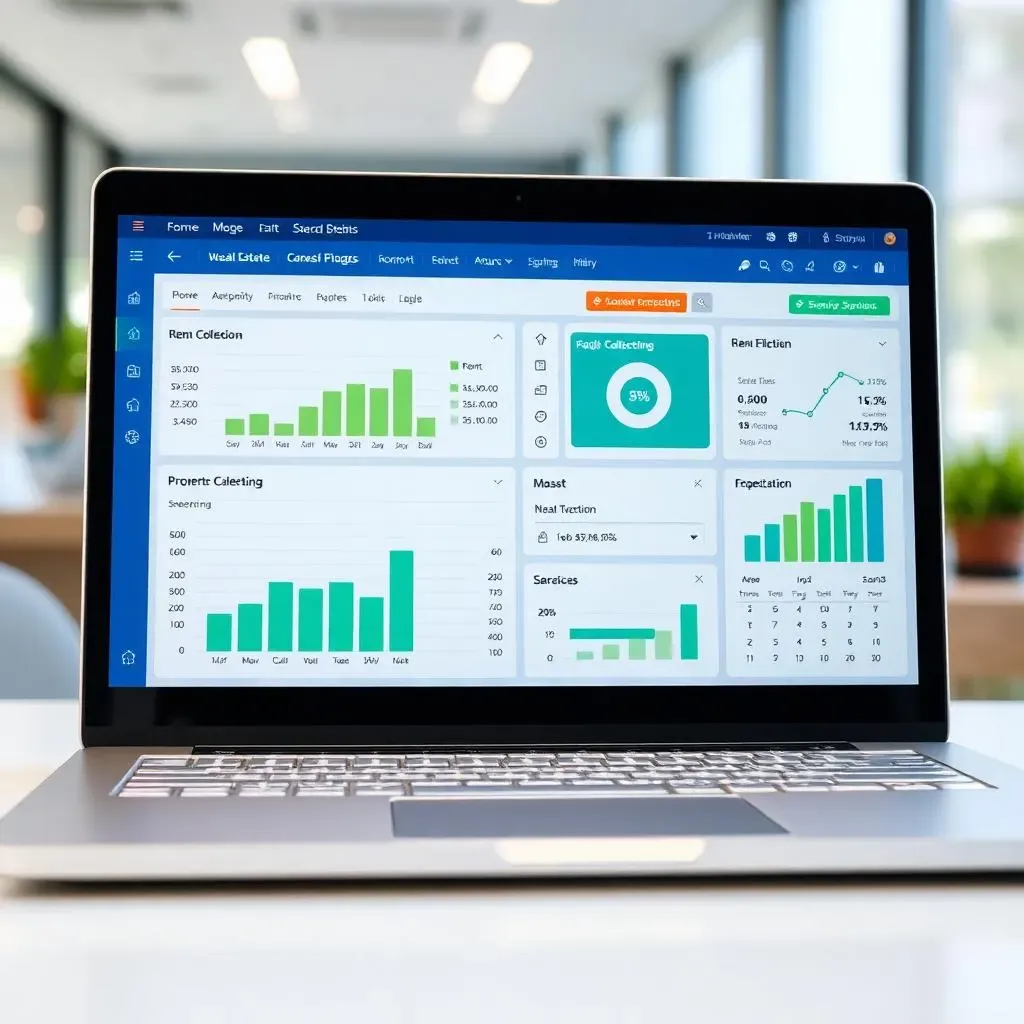
Real Estate Management Accounting Software That Stops the Financial Chaos
There's a version of property ownership that looks great on paper. Passive income. Growing equity. A portfolio that builds wealth while you sleep.
Then there's the version most landlords actually live. Chasing rent. Reconciling bank statements. Trying to remember which expense went to which property. Staring at a spreadsheet at midnight wondering if you've missed something that's going to hurt at tax time. On the collections side, this connects directly with rent collection and accounting for an automated arrears workflow.
The financial side of managing properties is where a lot of landlords quietly struggle. Not because they're bad with money, but because they're managing with tools that were never built for this job. A spreadsheet can track one property. It starts to crack at three. By ten, it's a liability. Modern accounting tools now slot into a wider centralized property management ecosystem so finance, operations, and reporting all share the same data.
That's the problem real estate management accounting software is built to solve. And in 2025, the best tools go well beyond basic bookkeeping. They connect your finances directly to your operations, so your rent tracking, maintenance costs, lease data, and reporting all live in one place, talking to each other.
This page breaks down what good property management and accounting software actually looks like, what it should be doing for your portfolio, and why landlords and property managers who get this right run fundamentally better businesses.
The Hidden Cost of Getting Property Accounting Wrong
Most landlords underestimate how much bad financial systems cost them. Not just in accountant fees or tax penalties, but in time, stress, and missed decisions.
Here's what poor property management bookkeeping software (or no software at all) typically produces:
- Rent payments manually tracked across multiple bank accounts
- Maintenance costs logged inconsistently or not at all
- No clear picture of profitability per property
- Tax season becoming a multi-week scramble
- Missed deductions because expenses weren't categorised correctly
- Late rent going unnoticed until it becomes a real arrears problem
A survey by the National Association of Realtors found that over 60% of independent landlords handle their own accounting, often with tools not designed for property management. The result is a lot of guesswork where there should be clarity.
The financial health of your portfolio depends on knowing your numbers, not at the end of the year but every single month. The right accounting software for property management companies makes that possible without it becoming a part-time job.
What Real Estate Accounting Software Should Actually Do
Before choosing any platform, it helps to know what you're actually looking for. The best property management software with accounting built in should cover these core functions:
Automated Rent Collection and Tracking. Every payment should be logged automatically against the correct property and tenant. Arrears should be flagged immediately, not discovered three weeks later. Good rental management accounting software removes the manual matching process entirely.
Expense Tracking by Property. Maintenance costs, insurance, agent fees, repairs, and service charges should each be categorised and attached to the relevant property. This is the foundation of understanding which properties are actually performing and which are quietly bleeding.
Income and Expense Reporting. You should be able to pull a clear profit and loss report for any property or your entire portfolio at any point in the month. Not just at year end. Real financial visibility means making better decisions about when to sell, when to invest more, and where inefficiencies are hiding.
Tax-Ready Financial Records. Good property management accounting software keeps your records organised in a way that makes tax preparation significantly less painful. Every deductible expense captured, every income entry dated and categorised, everything audit-ready without a last-minute scramble.
Integration with Operations. This is where most standalone accounting tools fall short. When your accounting software doesn't talk to your maintenance records, lease data, or tenant communicationsâoften solvable through a robust commercial real estate APIâyou end up with gaps. The best property management and accounting software connects the financial side with the operational side so everything is consistent.
Why Spreadsheets and Basic Tools Eventually Fail You
A lot of landlords start with spreadsheets. For one or two properties, it works. It's free, flexible, and familiar.
The problems start when the portfolio grows.
You have multiple properties generating income at different times. Maintenance costs hitting unpredictably. Service charges, insurance renewals, agent fees, ground rent. Tenant changes creating mid-month adjustments. Suddenly your spreadsheet has twelve tabs, colour-coded rows you made up three years ago, and a formula somewhere that nobody wants to touch.
Beyond complexity, spreadsheets offer zero automation. Every entry is manual. Every error is human. This is exactly where real estate automation software changes the equation. And every month, you're spending hours doing something that purpose-built property management bookkeeping software could handle in minutes.
The jump from spreadsheet to proper software isn't just a convenience upgrade. It's a step change in how accurately you understand your portfolio's financial performance.
The Numbers Behind the Problem
Five statistics that show why this matters:
- Over 60% of independent landlords manage their own accounting, most using tools not designed for property management. (Source: National Association of Realtors)
- Small landlords lose an average of $1,500 per year in unclaimed tax deductions due to poor record keeping. (Source: TurboTax Landlord Survey)
- Late rent costs UK landlords an estimated £900 million annually in lost income and administrative time. (Source: Goodlord Rental Tracker)
- Properties managed with dedicated software show 25-30% fewer financial discrepancies than those managed manually. (Source: AppFolio Property Management Index)
- Consistent, structured financial documentation reduces legal and tax dispute costs by up to 30%. (Source: Deloitte)
How BrickwiseAI Handles the Accounting Side of Property Management
BrickwiseAI is built as a full property management solution that connects your operations and your financials into one system. As a comprehensive AI rental operations software, it centralises everything from tenant calls to lease management. But the financial infrastructure underneath is what makes it genuinely useful as real estate management accounting software.
Here's how the financial side works in practice:
Automated Rent Collection
Alice tracks every payment, flags every missed one, and sends reminders automatically. Rent collection stops being something you manage and starts being something that just happens, a key benefit of real estate sales automation. Every payment is logged against the correct tenant and property with no manual matching required.
For landlords tired of checking bank accounts and cross-referencing spreadsheets, this alone justifies the switch from manual tracking to purpose-built rental management accounting software.
Expense Tracking Tied to Each Property
Every maintenance job, contractor payment, and operational cost is logged against the property it relates to. This isn't just tidy recordkeeping. It's the data you need to understand actual profitability per unit, not just total income vs. total expenses.
When Alice coordinates a maintenance job, the cost flows directly into the financial record for that property. Paired with automated home maintenance systems, landlords can ensure that both scheduling and cost tracking happen seamlessly. Your books stay current without you doing anything.
Clear Financial Reporting Across Your Portfolio
At any point, you can see income, expenses, arrears, and profitability across every property. The reporting isn't buried or complicated. It's designed for landlords who need financial clarity, not an accounting degree to interpret it.
This is where BrickwiseAI distinguishes itself from basic best accounting software for property management options that give you numbers without context. Here the numbers connect to actual operational activity.
Tax-Ready Records Without the Scramble
Because every transaction is categorised and logged in real time, tax preparation becomes a matter of pulling a report rather than reconstructing a year's worth of activity. Every deductible expense is captured. Every income entry is dated and attached to the right property.
For landlords working with accountants, this translates directly into lower accountancy fees because the prep work is already done.
Lease Data That Talks to Your Finances
One of the more overlooked features in accounting software for property management companies is the connection between lease terms and financial records. BrickwiseAI's AI lease management reads actual lease documents and tracks renewal dates, rent review clauses, and payment terms.
This means your financial forecasting is based on real lease data, not assumptions. Upcoming rent reviews are flagged before they happen. Expiring leases trigger reminders before void periods sneak up and damage your income projections.
Who Needs Dedicated Property Accounting Software
The honest answer is: anyone managing more than two rental properties.
Private landlords with small portfolios often assume dedicated software is overkill. In reality, the time saved on monthly reconciliation, the tax deductions captured correctly, and the early warning on arrears typically pays back the subscription cost several times over within the first year.
Professional landlords with larger portfolios have no realistic alternative. Dedicated landlord property manager software is essential because the operational complexity of tracking income, expenses, maintenance costs, and lease terms across 20, 50, or 100 properties simply cannot be managed manually without significant risk of error or oversight.
Letting agents and property management firms need property management and accounting software that scales with their client base. Every landlord client expects accurate financial reporting. Every missed payment or miscategorised expense is a relationship risk. A system that handles this automatically protects both the business and the clients it serves.
Pricing That Changes the Conversation
Traditional property management, including the accounting that comes with it, costs landlords 10-15% of monthly rent. On a typical UK rental at £1,200 per month, that's up to £180 every single month, per property.
BrickwiseAI starts at $4 per tenant per month.
That's not a rounding difference. That's a fundamentally different cost structure for professional-grade financial management across your entire portfolio. A 7-day free trial is available on all plans, so testing it costs nothing.
FAQs
What is real estate management accounting software and how is it different from regular accounting tools?
Regular accounting software like standard bookkeeping tools is built for general business finances. Real estate management accounting software is designed specifically for rental portfolios, with features like per-property expense tracking, automated rent collection, lease-linked financial records, and landlord-specific reporting. The difference matters because generic tools require significant manual workarounds to handle the way rental income and property expenses actually work.
Do I really need property management accounting software if I only have a few properties?
Even with two or three properties, dedicated property management bookkeeping software saves meaningful time and reduces the risk of missed deductions at tax time. Most landlords who switch from spreadsheets to proper software report that the time savings alone cover the cost within the first month. As your portfolio grows, the case becomes even stronger.
What should I look for in the best accounting software for property management?
Look for automated rent tracking and arrears alerts, per-property expense categorisation, clear profit and loss reporting, tax-ready records, and ideally integration with your broader property management operations. The best property management software with accounting built in connects your financials to your tenant communications, maintenance records, and lease data so everything stays consistent.
How does property management accounting software handle maintenance costs?
In a well-built system, every maintenance job is logged against the relevant property as it happens. When a contractor is paid, that cost flows directly into the financial record for that property. This gives you a real picture of maintenance spend per property over time, which is valuable both for profitability analysis and for tax purposes.
Is my financial data secure in cloud-based property management software?
Reputable platforms use encrypted storage and secure cloud infrastructure to protect financial and tenant data. In the UK, any software handling personal tenant data must also comply with GDPR. Before choosing any rental management accounting software, it's worth reviewing the platform's data security policies and checking whether they hold relevant certifications.
Getting Your Property Finances Under Control Is a Decision, Not a Discovery
Most landlords who are struggling financially aren't struggling because their properties are underperforming. They're struggling because they can't see clearly enough to know what's actually happening.
Bad tools create bad visibility. Bad visibility leads to late responses on arrears, missed tax deductions, unexpected voids, and maintenance costs that quietly erode margins.
Good real estate management accounting software doesn't make you a better investor on its own. But it gives you the financial clarity to make better decisions, catch problems early, and understand your portfolio in a way that spreadsheets and manual tracking simply cannot support.
The landlords running the most profitable portfolios aren't necessarily the ones with the best properties. They're the ones who know their numbers well enough to act on themâpowered by the right real estate management software.
That's the real value here.